Friday, October 12, 2012

Liturgical Music Reform: A "Sample" of What Can Be Done


Bishop Alexander Sample seems to be serious about the reform of liturgical music in his diocese (Marquette, Michigan).

Here’s an excerpt from his article, “A Liturgical Quiz and An Invitation” at the website of the Diocese of Marquette newspaper. This article is in the May 14, 2012 edition of the paper, so it’s “old news” at this point, but it still is an example of what can be done about liturgical music.

The article starts out:

I propose a brief quiz on the Sacred Liturgy. Answer true or false to the following statements: 1) Vatican II changed the language of the Mass from Latin to the vernacular (in our case, English). 2) Vatican II replaced the signing of Gregorian chant at Mass with more contemporary vernacular music.

If you answered “true” to one or both of these statements, you should hear a buzzer going off right now indicating at least one incorrect answer. I am sure that this will come as a surprise to many…

He then quotes relevant paragraphs from Sacrosanctum Concilium as evidence that Latin and Gregorian chant were never diminished in value, and that “these guiding statements from Vatican II have not been fully adhered to, and have sometimes simply been ignored.”
Bishop Sample adds:

Just on the issue of singing Gregorian chant at Mass, far from enjoying a “pride of place” in the liturgy, when was the last time you heard it sung or sang it yourself at Mass? Surely “pride of place” means more than an occasional sung Sanctus or Agnus Dei.

After assuring his readers that he is not proposing a “simple return to all Latin and Gregorian chant in the Mass”, he says:

What I am saying is that, in our ongoing efforts to renew and reform the Sacred Liturgy, we need to go back to the sources that gave us the direction for liturgical renewal, especially the actual Vatican II document on the Liturgy…[W]e need to interpret the liturgical reforms called for by Vatican II in light of the whole liturgical tradition of the Church, as an organic development, and not a break with the past.
This especially applies to the area of music in the Sacred Liturgy. Let’s face it, in most places liturgical music has become simply selecting the four hymns for Mass (entrance, offertory, communion, and recessional). Many might be surprised to learn that this is not at all our liturgical tradition and is not what was envisioned by Vatican II. But that is what we have become used to.

The Church’s tradition actually calls for us to “sing the Mass,” not sing “at” Mass. The texts of the Mass given in the Missal are meant to be sung. Instead we often just paste on the four hymns which may or may not related to the actual texts of the Mass. Not sure what this means? Read on!

And Bishop Sample had a plan: he invited all to attend a two-day workshop on Sacred Music, which was apparently held last June.

 
I don’t know anything about the workshop – what was covered, how many attended, or whether parishes are changing their approach to liturgical music – but I do know that Bishop Sample posted the following advertisement on his Face Book page (my emphases):

I am posting HERE my advertisement for the position of Diocesan/Cathedral Director of Sacred Music. Pass the word to those who might be interesting and who might "fit the bill":

POSITION OPENING: FULL-TIME DIOCESAN/CATHEDRAL DIRECTOR OF SACRED MUSIC
 
The Catholic Diocese of Marquette in Michigan’s Upper Peninsula is seeking a full-time Diocesan Director of Sacred Music/Cathedral Director of Sacred Music. Time will be split between directing St. Peter Cathedral’s sacred music program and leading the diocesan effort to renew and reform sacred music as detailed in the bishop’s directives on sacred music, which seek to implement the Church’s authentic discipline regarding sacred music as outlined in official Church documents. Qualifications include fidelity to Church teaching and discipline, proficiency in organ, and knowledge of Gregorian chant. Applicants must be able to work well with choirs, cantors and other musicians and possess the patience necessary to teach others, leading them gradually to a full understanding of sacred music in Catholic worship. Full time compensation and benefits will be commensurate with applicant’s educational and work experience. Please send cover letter, resume and references to: Office of the Bishop, Diocese of Marquette, 1004 Harbor Hills Drive, Marquette, MI 49855. Deadline for submitting applications is November 15, 2012.

It would be nice to see this sort of thing happening in more than one diocese!

Thursday, October 11, 2012

Feast of the Motherhood of the Blessed Virgin Mary

These are some of the readings from the Office of Matins for this feast, which is celebrated on October 11 in the "old" calendar. It seems to me that we have lost so much by the revision of the calendar which omits so many feasts! By celebrating our saints during the week, as well as on Sundays, we keep our hearts and minds on the things of God; it’s a reminder that the things of the world are fleeting and superficial, and that our true home is Heaven.
 
From the Acts of Pope Pius XI

In the year 1931, amid the applause of the whole Catholic world, solemn rites were celebrated to mark the completion of the fifteen centuries which had elapsed since the Council of Ephesus, moving against the Nestorian heresy, had acclaimed the Blessed Virgin Mary, of whom Jesus was born, as Mother of God. This acclamation had been made by the Fathers of the Church under the leadership of Pope Celestine. Pius XI, as Supreme Pontiff, wished to commemorate the notable event and to give lasting proof of his devotion to Mary.

Now, there had existed for many years in Rome a grand memorial to the proclamation of Ephesus, the triumphal arch in the basilica of Saint Mary Major on the Esquiline Hill. This monument had already been adorned by a previous pontiff, Sixtus III, with mosaics of marvelous workmanship, now falling to pieces from the decay of the passing ages. Pius XI, therefore, out of his own munificence, caused these to be restored most exquisitely and with them the transept of the basilica. In an Encyclical Letter Pius set forth also the true history of the Council of Ephesus, and expounded fervently and at great length the doctrine of the prerogatives of the Blessed Virgin Mary as Mother of God. He did this that the doctrine of this lofty mystery might sink more deeply into the hearts of the faithful. In it he set forth Mary, the Mother of God, blessed among women, and the most holy Family of Nazareth as the exemplars to be followed above all others, as models of the dignity and holiness of chaste wedlock, as patterns of the holy education to be given youth.

Finally that no liturgical detail be lacking, he decreed that the feast of the Divine Motherhood of the Blessed Virgin Mary be celebrated annually on the 11th day of October by the universal Church with a proper Mass and Office under the rite of a double of the second class.


A Homily of St. Bernard the Abbot
Homilia 1. de Laud. Virg. Matris
 
“Son, why hast thou thus dealt with us?” Mary called God, the Lord of Angels, her son.  Which of the angels would have dared to do so? It is enough for them, and they reckon it is a great thing, that, being naturally spirits, they should receive the grace of being made and called angels, as witness David: “Who maketh spirits his angels.”

But Mary, knowing herself to be his Mother, doth boldly apply the word Son to that Majesty whom the angels do serve with awe; neither doth God despise to be called what he hath made himself. For a little after, the Evangelist saith: “And he was subject unto them.” Who to whom? God to men. I say that God, unto whom the angels are subject, and who is obeyed by the Principalities and Powers, was subject to Mary.

Marvel thou at both these things, and choose whether to marvel most at the sublime condescension of the Son, or at the sublime dignity of Mary. Either is amazing, either marvelous. That God should obey this woman is a lowliness without parallel; that this woman should rule over God, an exaltation without match.

In praise of virgins, and of virgins only, is it sung that “These are they which follow the Lamb whithersoever he goeth”. Of what praise, then, thinkest thou that she must be worthy who even leadeth the Lamb? O man, learn to obey. O earth, learn to submit. O dust, learn to keep down. It is of thy Maker that the Evangelist saith: “And he was subject unto them.” Blush, O proud ashes. God humbleth himself; and dost thou exalt thyself? God is subject unto men; and wilt thou, by striving to rule over men, set thyself before thy Maker?

O happy Mary, lowly and virgin; and wondrous virginity, which motherhood destroyed not, but exalted; and wondrous lowliness, which the fruitful virginity took not away, but ennobled; and wondrous motherhood, which was both virgin and lowly. Which of them is not wondrous? which of them is not unexampled? and which of them doth not stand alone? The wonder would be if thou wert not puzzled at which to wonder most: motherhood in a virgin, or virginity in a mother; a motherhood so exalted, or lowliness in such exaltation.

But indeed more marvelous than any one of these things is the combination of them all, and without all comparison, it is more excellent and more blessed to have received them all, than to have received any one of them alone. What wonder is it that God, of whom we see and read, that He is wonderful in his holy places, should have shown himself wonderful in his Mother? O ye that be married, honor this incorruption in corruptible flesh; O holy maidens, gaze in wonder at motherhood in a maid; O, all mankind, take pattern by the lowliness of the Mother of God.

Sunday, October 7, 2012

Homily on Marriage: Fr. Andersen


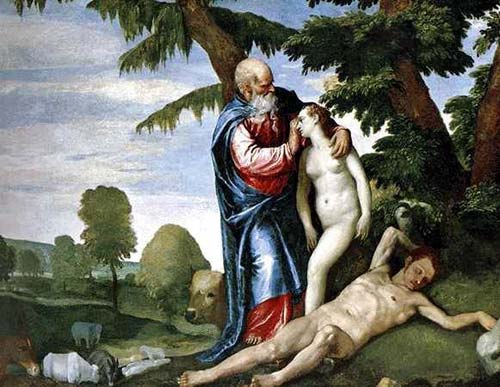
This homily (for the 27th Sunday in Ordinary Time) by Fr. Eric M. Andersen, Sacred Heart-St. Louis in Gervais, contains a very clear and beautiful description of the Sacrament of Marriage as we see it unfold in the Garden of Eden with our first parents, Adam and Eve. 

There is also an important message for those suffering from same-sex attraction.

And finally, this homily also contains an important message for those who have been divorced and remarried, or those who are experiencing the threat or the effects of divorce in any way in their lives. (mostly my emphases)

On the third day of creation, God spoke and out of nothing came to be all green herbs, seed-bearing plants, and fruit-bearing trees. But then what did God do with all of these plants? We are told in chapter 2 of Genesis that “the Lord God had planted a paradise of pleasure from the beginning” (Gen 2:8). But all of creation was not paradise. The word paradise comes from the Greek paradeisos, meaning a walled, or enclosed, garden or park. So paradise was one special part of creation that God enclosed from the beginning. This was where He exercised His artistry in creation. He had created herbs and seed bearing plants and fruit bearing trees. But in this walled garden, God artfully arranged them into a paradise. Meanwhile God continued with the rest of creation outside of the walled garden. On the sixth day, He created man from the clay of the earth and breathed life into the man who “became a living soul” (2:7).

This man, Adam, was not simple-minded. You may recall from a few weeks ago that Adam was created with infused knowledge from God. Therefore, he was knew the mysteries of creation and the wisdom of God. He was filled with the Holy Spirit, and his intellect was far superior to ours because he was created without sin. There was also no death, so his body was immortal and his soul was immortal. All this is outside of the garden.

Then, God placed the man within the enclosure of paradise. The man was not created in paradise. Paradise was a gift to the man. We do not know how long this time lasted before Adam was brought into paradise. We do know that Adam was alone with God in this paradise filled with plants, flowers, trees, and a river to water the garden.

Earlier, before God created the man, He had already created all the beasts of the earth, and all the birds of the air, but He had not placed them in the garden. And God said, “It is not good for man to be alone; let us make him a help like unto himself” (Gen 2:18). So God brought the beasts and birds into the garden to Adam for Adam to name them. God did not name them. Adam named them. God did name Adam. That is what a father does. A father gives a name to his children, claiming them as his own. But God did not name the beasts or the birds or the plants. He gave that fatherly responsibility to Adam to name the animals, the birds, the trees and plants that surrounded him. Adam named them, therefore he was responsible to care for them. “…but for Adam there was not found a helper like himself (Gen 2:20).

Then God created the woman. Unlike Adam who was created outside of the garden, the woman was created inside the garden. Unlike the man, the woman was not created from the clay of the earth. She was created from the side of the man. Unlike the man, God did not name the woman. She was given to the man by God and the man named her ‘woman’. He was given to name her so that he would claim her as his own, to care for her, to provide for her, and to protect her. He gave her a name to share in his name, because, although different from him, she was like him, taken from his very bones.

This is a truly happy ending if we end the story here because, at this point, all is love. Up to this point, there is no sin and no death. Let us meditate happily and blissfully on this time at the beginning of creation. All is love because all creation at this point reflects God who is love. Therefore all is fruitful and fertile and creative. Where there is love, there is creativity, fertility, and fruitfulness.

What does this passage tell us about the union of man and woman? One crucial aspect of this sacred narrative is that the union happens in paradise. It does not happen in the wild. Remember that outside of this walled garden is the wilderness. The garden is surely expansive. Adam and Eve do not feel constricted in this garden, but nevertheless, it is enclosed which means that it is set apart from the rest of creation. That is the meaning of the word ‘holy’ or ‘sacred’. Sacred means cut off or consecrated; belonging not to nature, but to God. Of course, all nature belongs to God, but to be consecrated, or set apart is a willed act. God wills that certain things be set apart and man must participate in this act by willfully consecrating things to God.

Marriage is a willful act of consecration. What validates a sacramental marriage is the free, willed consent of both parties, being one baptized man and one baptized woman, who publicly speak their consent in front of witnesses and an official representative of the Church, normally a priest or deacon. This sacrament is an act of consecration.

What do we mean by consecration? Let’s look at the consecration of the Eucharist. We begin with a piece of bread and a small amount of wine poured into a chalice. The Holy Spirit descends upon the bread at the words of the priest. The Holy Spirit changes the bread into the Body, Blood, Soul and Divinity of Jesus Christ. The same thing happens to the wine. It is no longer bread. It is no longer wine. It can never be used for anything profane again. It has been cut off, or consecrated; set apart from all profane use. It can never be used as bread again. It is now the Holy Eucharist for as long as it exists. Therefore, we protect it by keeping it in a safe place, in the tabernacle. I repeat, it can never be used for anything profane after the consecration. It can never be used as a cracker. It should never be eaten as though it is a cracker. It should never be approached casually. Every single crumb of the Sacred Host must be protected. That is why we hold the paten under your chin or under your hands when you receive Holy Communion. That is why the priest holds his fingers together after the consecration and then purifies those fingers with wine and water and consumes it–so that not one crumb is lost. That is why we cover the tabernacle with a veil. It is so sacred that it must be protected.

And the union of one man and one woman in marriage is so sacred that it must be protected with the same diligence and the same meticulous care. The union of man and woman did not happen in the wilderness; it happened in paradise. It happened in a special place that God had set apart. God had brought the man from the wilderness into this consecrated place. God had created the woman in this sacred place and the union of one man and one woman was willed by God, and happened in the sight of God in this sacred place set apart from all that was profane. The two become one flesh in a sacred place that is fruitful and fertile because of the love of God. The man and woman are consecrated together and become as one. The man gives the woman his name. He claims her as his own and is responsible to care for her and love her as his very self just as Adam was given to care for the woman he named. The Holy Spirit descends upon the man separately from the woman but they become as one, just as the bread and wine are offered separately but become as one. The Host is the Body and the Blood of Jesus Christ. Likewise, the Precious Blood in the chalice is the Body and the Blood of Jesus Christ. So the husband and the wife are individuals, but they are joined as husband and wife and they can never be separated again.

Once the Eucharist has been consecrated and mingled together in the chalice, the Body and Blood of Christ can never be separated again. The Body is consecrated separately from the Blood, but then they are co-mingled in the chalice. Once that happens, the Body and Blood can never be separated again. In a similar manner, once a man and woman become husband and wife in the sacrament of Matrimony, they can never be separated again. They are consecrated as a married couple, meaning they are cut off from single life and belong together. They can never be separated again. Our Lord in the gospel ratifies this saying that “What therefore God hath joined together, let no man put asunder” (Mk 10:9).

Now, let’s return to the union of the Sacred Host and the Precious Blood in the sacrament of the Holy Eucharist. This tells us something else very important about the union of a man and a woman. In the Mass, a priest comes to the altar and he consecrates the bread and the wine into the Body and Blood of Christ. They are transformed in the sacrament by the power of the Holy Spirit. A priest cannot not take a Host and consecrate it and then separately take another host and consecrate it, avoiding the consecration of the Precious Blood and then attempting to co-mingle the two hosts into one. He can consecrate many hosts but they are already as one Body of Christ. He could not avoid to consecrate the Precious Blood. Likewise, a priest could not avoid the consecration of the Sacred Host and attempt to only consecrate two chalices of the Precious Blood and then mingle them together. That would not be the Body and Blood of Jesus Christ. It would not be the Eucharist. It would in fact be sacrilegious, meaning that it would be cut off from the holy; cut off from God. That is why marriage can only be, by definition, a union of one man and one woman and nothing else. Any other combination is not marriage. If you find yourself in this situation, or if you are suffering due to same-sex attraction, do not despair. You are not defined by those feelings. You are defined as a beloved son or daughter of God and He wishes to heal you and fill you with the Holy Spirit. Come and talk to me about it. I will receive you with the love of God.

Our Lord has set these boundaries for us to help us to understand paradise, and to get back to paradise. The Sacrament of Matrimony is entered into so that each spouse can help the other get to paradise, which we call heaven. Heaven is an enclosed garden. We are now in the world, but not of the world. Our fulfillment is to get back to the garden, but we must cooperate with God to get there. The sacraments happen in paradise and when we participate in the sacraments, we experience paradise here on earth in order to lead us fully to the paradise at the end of our days. Marriage is not meant to be easy. It is a vocation, therefore it involves carrying the Cross of Jesus Christ.

That having been said, earth is not heaven. Life on earth is not perfection. We are all sinners. We suffer from sin. Some marriages are a source of great suffering. If you have suffered due to a divorce, God does not will to abandon you. Come and talk to me about it. I will receive you with the love of God. If you were married outside the Church, or remarried after a civil divorce, come and talk to me. I will receive you with the love of God. If your parents are divorced and you are suffering, come and talk to me. I will receive you with the love of God. God does not want you to live your life in a state of uncertainty and shame.  

The Church is bound to the words our Lord spoke in the gospel today about divorce and remarriage, and we cannot change that. The Church assumes that all marriages are valid. Therefore, there is no such thing as divorce for Catholics. But what happens to those who have divorced and remarried? The Christian life is all about reconciliation with God. So how do we reconcile this situation? The Church has no power to nullify something that is valid, but if there is something that invalidated the marriage from the beginning, the Church can identify that and formally declare in writing that the marriage was never a valid sacrament. Yes, the marriage happened and the children are legitimate. It does not erase the marriage. It does not heal all the wounds of those involved, but it does begin the healing process making it possible for both parties to reconcile with God. If you or someone you love is in this situation, have them come and talk to me. God wants you to be healed and I want to help. 

Feast of the Most Holy Rosary


These are some of the readings from the office of Matins for the feast of the Most Holy Rosary of the Blessed Virgin Mary.

Reading 4
 
When the heresy of the Albigenses was making head against God in the County of Toulouse, and striking deeper roots every day, the holy Dominick, who had but just laid the foundations of the Order of Friars Preachers, threw his whole strength into the travail of plucking these blasphemies up.  

That he might be fitter for the work, he cried for help with his whole soul to that Blessed Maiden, whose glory the falsehoods of the heretics so insolently assailed, and to whom it hath been granted to trample down every heresy throughout the whole earth. It is said that he had from her a word, bidding him preach up the saying of the Rosary among the people, as a strong help against heresy and sin, and it is wonderful with how stout an heart and how good a success he did the work laid upon him.  

This Rose-garden (or Rosary) is a certain form of prayer, wherein we say one-hundred-and-fifty times the salutation of the Angel, and the Lord's Prayer between every ten times, and, each of the fifteen times that we say the Lord's Prayer, and repeat tenfold the salutation, think of one of fifteen great events in the history of our Redemption. From that time forth this form of godly prayer was extraordinarily spread about by holy Dominick, and waxed common. That this same Dominick was the founder and prime mover thereof hath been said by Popes in divers letters of the Apostolic See.

Reading 5

From this healthy exercise have grown up numberless good fruits in the Christian Commonwealth. Among these deserveth well to be named that great victory over the Sultan of Turkey, which the most holy Pope Pius V, and the Christian Princes whom he had roused, won at Lepanto, (on the 7th day of October, the first Lord's Day in the month, in the year of our Lord 1571).

The day whereon this victory was gained was the very one whereon the Guildbrethren of the most holy Rosary, throughout the whole world, were used to offer their accustomed prayers and appointed supplications, and the event therefore was not unnaturally connected therewith. This being the avowed opinion of Gregory XIII, he ordered that in all Churches where there was, or should be, an Altar of the Rosary, a Feast, in the form of a Greater Double, should be kept forever upon the first Lord's Day of the month of October, to give unceasing thanks to the Blessed Virgin, under her style of (Queen of) the (Most Holy) Rosary, for that extraordinary mercy of God. Other Popes also have granted almost numberless Indulgences to those who say the Rosary, and to those who join its Guilds.

Reading 6

In the year 1716, Charles VI., Elect- Emperor of the Romans, won a famous victory over countless hordes of Turks, [near Temeswar] in the kingdom of Hungary, upon the day when the Feast of the Dedication of the Church of St Mary of the Snows was being kept, and almost at the very moment when the Guildbrethren of the most holy Rosary were moving through the streets of Rome in public and solemn procession, amid vast multitudes, all filled the deepest enthusiasm, calling vehemently upon God for the defeat of the Turks, and entreating the Virgin Mother of God to bring the might of her succour to the help of the Christians.

A few days later, (upon the Octave of the Feast of the Assumption,) the Turks raised the siege of Corfu. These mercies Clement XI devoutly ascribed to the helpful prayers of the Blessed Virgin, and that the memory and the sweetness of such a blessing might for all time coming endure gloriously, he extended to the whole Church the observance of the Feast of the most holy Rosary, for the same day and of the same rank, (as it had already been in the places before mentioned.)

Benedict XIII commanded the record of all these things to be given a place in the Service-book of the Church of Rome; and Leo XIII, in the most troublous times of the Church and the cruel storm of long pressing evils, by fresh Apostolic letters vehemently urged upon all the faithful throughout the earth the often saying of the Rosary of (the Blessed Virgin) Mary, raised the dignity of the yearly festival, added to the Litany of Loretto the Invocation Queen of the Most Holy Rosary, and granted to the whole Church a special Office for this solemn occasion. Let us all then be earnest in honouring the most holy Mother of God in this form which she liketh so well, that even as the entreaties of Christ's faithful people, approaching her in her Garden of Roses, have so often won her to scatter and destroy their earthly foes, so she may gain for them the victory over their hellish foes likewise.

Reading 7
 
Homily by St Bernard, Abbot (of Clairvaux) Homily on Holy Mary
 
To commend His Own love towards us, and to bring to nought the wisdom of men, God was pleased to take flesh of a woman, albeit a virgin, that He might bring like against like, heal by opposites, pluck out the poisonous thorn, and blot out mightily the handwriting of our sin that was against us. Eve was a thorn, Mary is a rose. Eve is a thorn that pierceth, Mary is a rose that charmeth all the senses. Eve was a thorn that fixed death into all, Mary is a rose that bringeth health to all. Mary was a white rose through her virginity, and a red rose through her love. She was white in her flesh, red in her mind; white in that she followed the path of grace, red in that she trod down sin; white by the purity of her affections, red by the mortification of her body; white by her love for God, red by her compassion for her neighbour.

Reading 8
Homily on the water course.
 
The Word was made flesh, and dwelleth even now among us. He dwelleth in our memory. He dwelleth in our thought. He hath come down even unto our imagination; and how sayest thou doth he so? By lying in the manger, by nestling in His mother's breast, by preaching upon the mountain, by remaining all night in prayer to God, by hanging upon the Cross, by turning pale in death, by going down free among the dead and triumphing in hell, by rising again the third day, by showing to the Apostles the places of the nails the marks of his victory, by ascending up into heaven while they all beheld Him, of which of these things think we not with truth, with godliness, with holiness?  

If I think of any of these, I think of God, and He is my God through them all. To think of these things I have decreed to be wisdom, and to set forth the memory of their sweetness I have judged to be prudence. The rod of Aaron the Priest brought forth buds, and bloomed blossoms, and yielded almonds; but these things are the almonds of that Rod which came forth out of the stem of Jesse, the Rod whereof sprang the flower, a Rod which was raised in Mary into places higher than the earthly tabernacle, higher indeed, even into places higher than angels, since she received the Word into herself out of the very heart of the Eternal Father.

Saturday, October 6, 2012

St. Bruno


From The Life of St. Bruno, condensed from Vol. I of “Aux Sources des la Vie Cartusienne” by Dom Maurice la Porte, monk of Selignac and former novice mas­ter of La Grande Chartreuse:

“St Bruno conceived of the Carthusian vocation as the search for God alone, thus making the ultimate concern of every human life the only concern of the Carthusian life, which achieves this in the utter simplicity of a pure heart that is animated by Love’s singleness of purpose and has focussed itself in a total ‘one‑pointedness,’ a ‘still‑pointedness,’ solely upon loving God for His own sake, in all things, with this one and only Divine Love with which He loves Himself.

“From this sense of vocation to live for love of God alone flows that marvel­ous detachment from everything that is not purely God alone, in Himself. Thus even the most cherished and choice means must be used with the same detachment that St Bruno showed when the Divine Will of God’s Good Pleasure was manifest­ed through the call of Divine Providence demanding that he willingly sacrifice his personal vocation with its proper spirituality and even his nascent commun­ity and their hermitage.

“By the ‘Vita abstracta’ is meant the living exclusively of the one thing nec­essary — that is, the ‘better part’ — of sitting at the Lord’s feet entirely ab­sorbed in Him alone. In this we discover the spirit of Spiritual Virginity which is the deliberate entrance into the mystery of the Eternal repose and Sabbath rest that is in God Himself. He calls the solitary contemplative in­to physical solitude so as to pass through inner solitude into the very Soli­tude that God is, as He rests in Himself. In the abandonment of all preoccu­pations for the sake of that freedom from all divisive care and distracting concerns that enables the exclusive, attentive receptivity and waiting upon God alone, the spiritual Virgin attains to that complete silencing which dis­engages the body, mind and spirit from all attachments to created things to be freely united to God in an habitual union. In this lies the secret apos­tolic fecundity of the Carthusian’s hidden ministry of contemplative prayer and sacrifice in the Church, cooperating in her redemptive mission through the sanctity of his life ‘hidden with Christ in God’ in the solitude of the cell. Clearly, this is the function of Virginity in the heart of the Church, the Virginal Body and Bride of Christ, which is her most essential character­istic in her relationship with her Lord and Divine Spouse. In this she is disengaged from every created concern and temporal care so as to attend in loving receptivity to His glorious, deifying, transcendent immanence ever present in her heart, where He, in perfect love of her, brings her to birth by enabling her to love Him with the very Divine Love with which He infinite­ly and eternally loves Himself. Thus are His nuptials with her consummated as she joins Him in His Eternal Living Sacrifice of Love in the Holy Spirit for the Father.”  (pp. 80-81)

“In his letter to Raoul le Verde, St. Bruno wrote that stability requires the great strength of soul — conviction — for solitude is the realm only of the strong: “Here [in solitude] the strong man is now free to enter into himself…here God will certainly recompense his athletes for their labors with the best prize of all.”  St. Bruno also admonished the Community of Chartreuse to be certain that if one loses the most desirable opportunity for Divine Union in solitude, this will be a constant regret relieved only when he takes to heart the salvation of his soul by recovering the lost ground of his vocation. Sta­bility and constancy are therefore essential constituents of the contempla­tive vocation in solitude. It requires calm perseverance and continuity in effort. It demands a soul strong enough to renounce every escape through dispersion, distraction and dissipation, for the soul must have no need of being sustained by the diverse images of often‑renewed exterior activities. The cell offers one fundamental activity and no other: the useful self‑ap­plication to that ever-vigilant virginal receptivity which is contemplative prayer.” (p. 85)

Tuesday, October 2, 2012

Guardian Angels


The third lesson from Matins in the Divine Office for the Feast of the Guardian Angels:


From the Sermons of St Bernard, Abbot of Clairvaux. On Ps. xc

He hath given His Angels charge over thee. A wonderful graciousness, and a wonderful outpouring of love. For who hath given charge? And what charge? Unto whom? And over whom?  

Let us carefully consider, my brethren, let us carefully hold in mind this great charge. For who hath given this charge? To Whom belong the Angels? Whose commandments do they obey, and Whose will do they do? He hath given His Angels charge over thee, to keep thee in all thy ways, and that not carelessly, for they shall bear thee up in their hands.  

The Highest Majesty, therefore, hath given charge unto Angels, even His Angels. Unto these beings so excellently exalted, so blessed, so near to Himself, even as His own household, unto these hath He given charge over thee. Who art thou? What is man, that Thou art mindful of him? or the son of man, that Thou visitest him? (Ps. viii. 5) Even as though man were not rottenness, and the son of man, a worm. (Job. xxv. 6.) But what charge hath He given them over thee? To keep thee in all thy ways.

Thanks to ChurchMilitant.TV for this little video on Guardian Angels.

Monday, October 1, 2012

Prayer to St. Joseph: Pope Leo XIII


In 1889, Pope Leo XIII promulgated the encyclical Quamquam Pluries, in which he discussed the power of prayer to the saints (especially the Blessed Virgin Mary) during “periods of stress and trial” in the world.  He also discussed devotion to St. Joseph, and presented a prayer to St. Joseph to be said after the Rosary during the month of October.

The Holy Father gives the following explanation for the need for special prayers for the world at that time (and he could be speaking of our current world situation!):

 …Now, Venerable Brethren, you know the times in which we live; they are scarcely less deplorable for the Christian religion than the worst days, which in time past were most full of misery to the Church. We see faith, the root of all the Christian virtues, lessening in many souls; we see charity growing cold; the young generation daily growing in depravity of morals and views; the Church of Jesus Christ attacked on every side by open force or by craft; a relentless war waged against the Sovereign Pontiff; and the very foundations of religion undermined with a boldness which waxes daily in intensity. These things are, indeed, so much a matter of notoriety that it is needless for Us to expatiate on the depths to which society has sunk in these days, or on the designs which now agitate the minds of men. In circumstances so unhappy and troublous, human remedies are insufficient, and it becomes necessary, as a sole resource, to beg for assistance from the Divine power. (1)


… At this proximity of the month of October, which We have already consecrated to the Virgin Mary, under the title of Our Lady of the Rosary, We earnestly exhort the faithful to perform the exercises of this month with, if possible, even more piety and constancy than heretofore. We know that there is sure help in the maternal goodness of the Virgin, and We are very certain that We shall never vainly place Our trust in her. If, on innumerable occasions, she has displayed her power in aid of the Christian world, why should We doubt that she will now renew the assistance of her power and favor, if humble and constant prayers are offered up on all sides to her? …

But We entertain another object, which, according to your wont, Venerable Brethren, you will advance with fervor. …We judge it of deep utility for the Christian people, continually to invoke with great piety and trust, together with the Virgin-Mother of God, her chaste Spouse, the Blessed Joseph; and We regard it as most certain that this will be most pleasing to the Virgin herself… And as, moreover, it is of high importance that the devotion to St. Joseph should engraft itself upon the daily pious practices of Catholics, We desire that the Christian people should be urged to it above all by Our words and authority. (2)

The special motives for which St. Joseph has been proclaimed Patron of the Church, and from which the Church looks for singular benefit from his patronage and protection, are that Joseph was the spouse of Mary and that he was reputed the Father of Jesus Christ. From these sources have sprung his dignity, his holiness, his glory. In truth, the dignity of the Mother of God is so lofty that naught created can rank above it. But as Joseph has been united to the Blessed Virgin by the ties of marriage, it may not be doubted that he approached nearer than any to the eminent dignity by which the Mother of God surpasses so nobly all created natures. For marriage is the most intimate of all unions which from its essence imparts a community of gifts between those that by it are joined together. Thus in giving Joseph the Blessed Virgin as spouse, God appointed him to be not only her life's companion, the witness of her maidenhood, the protector of her honor, but also, by virtue of the conjugal tie, a participator in her sublime dignity.

…And for such reasons the Blessed Patriarch looks upon the multitude of Christians who make up the Church as confided specially to his trust—this limitless family spread over the earth, over which, because he is the spouse of Mary and the Father of Jesus Christ he holds, as it were, a paternal authority. It is, then, natural and worthy that as the Blessed Joseph ministered to all the needs of the family at Nazareth and girt it about with his protection, he should now cover with the cloak of his heavenly patronage and defend the Church of Jesus Christ.  (3)


This is the reason why—trusting much to your zeal and episcopal authority, Venerable Brethren, and not doubting that the good and pious faithful will run beyond the mere letter of the law—We prescribe that during the whole month of October, at the recitation of the Rosary, for which We have already legislated, a prayer to St. Joseph be added, the formula of which will be sent with this letter, and that this custom should be repeated every year. To those who recite this prayer, We grant for each time an indulgence of seven years and seven Lents… (6)

It strikes me that praying this prayer in October is particularly poignant and necessary for our nation, as we face the November presidential election. Calling on St. Joseph, along with the Blessed Virgin Mary, makes perfect sense!  

And of course, it was Pope Leo XIII who wrote and instituted the praying of the St. Michael prayer after low Mass (go here for other Leonine prayers, including the longer version of the St. Michael prayer); certainly it would be appropriate to be begging for the Archangel’s aid as well, as we count down to election day in November.

Here’s the prayer to St. Joseph:

To you, O Blessed Joseph, we come in our trials, and having asked the
help of your most holy spouse, we confidently ask your patronage
also. Through that sacred bond of charity which united you to the
Immaculate Virgin Mother of God and through the fatherly love with
which you embraced the Child Jesus, we humbly beg you to look
graciously upon the beloved inheritance which Jesus Christ purchased
by his blood, and to aid us in our necessities with your power and
strength.

O most provident guardian of the Holy Family, defend the chosen
children of Jesus Christ. Most beloved father, dispel the evil of
falsehood and sin. Our most mighty protector, graciously assist us
from heaven in our struggle with the powers of darkness. And just as
you once saved the Child Jesus from mortal danger, so now defend
God's Holy Church from the snares of her enemies and from all
adversity. Shield each one of us by your constant protection, so
that, supported by your example and your help, we may be able to live
a virtuous life, to die a holy death, and to obtain eternal happiness
in heaven. Amen.